
Cooking is often imagined as an activity of abundance: full markets, complete pantries, every ingredient available on demand. In reality, most cooking happens under constraint. Something is missing. Time is short. Energy is low. Equipment is limited. These constraints are not obstacles to good cooking; they are the conditions that produce it. Many of the most enduring dishes in culinary history exist precisely because cooks learned how to work intelligently within limits.
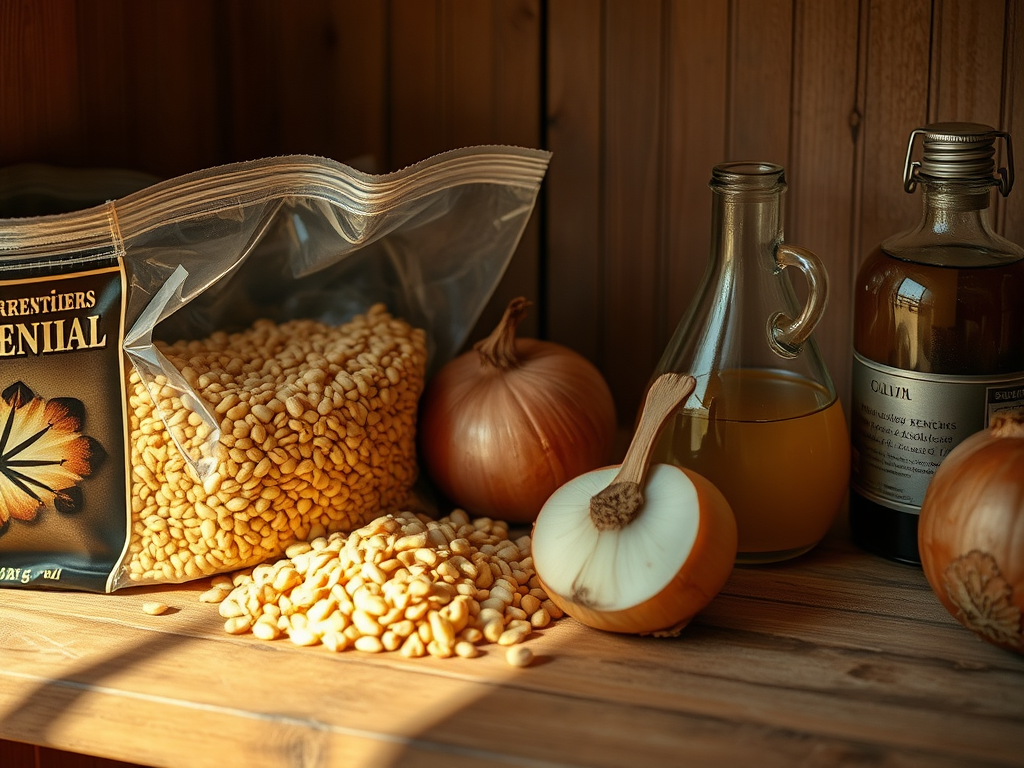
The pantry is the most honest expression of constraint. It represents not aspiration, but reality—what you actually have, not what you wish you had. When cooking begins from the pantry rather than the recipe, the process changes. Instead of asking “what should I make?”, the cook asks “what can this become?” This shift encourages responsiveness. It prioritizes understanding over acquisition. A half bag of lentils, an onion, and some oil are not a compromise; they are a structure waiting to be activated.
Constraints sharpen decision-making. With endless options, choices become decorative. With limited options, choices become meaningful. If you have only one protein, one vegetable, and one sauce component, technique carries the dish. Heat control, slicing, timing, and seasoning suddenly matter more than novelty. This is why experienced cooks often prefer sparse pantries: fewer ingredients force clarity. Excess can distract as much as it can inspire.
Time is another decisive constraint. Many people equate good cooking with long cooking. While time can deepen flavor, it is not always available. The discipline lies in choosing techniques that match the time window. Stir-frying, pressure cooking, and thin slicing exist because cooks needed speed without sacrificing quality. Conversely, slow techniques—braising, fermentation, resting—exist because time was available but resources were not. Good cooking is not about choosing the “best” method, but the appropriate one.
Equipment also shapes outcomes. A single pan can produce hundreds of dishes if the cook understands how to use it. Limited equipment encourages technique refinement. You learn how to control sticking, how to deglaze, how to build layers in one vessel. In contrast, too many tools can encourage avoidance of fundamentals. The cook reaches for gadgets instead of skill. Historically, most cuisines developed with minimal equipment, yet produced extraordinary depth. This is not nostalgia; it is evidence.
Constraints also influence flavor profiles. When ingredients are limited, seasoning strategies become deliberate. Salt, acid, and fat are used with intention. Spices are chosen carefully. Garnishes become functional rather than ornamental. A squeeze of lemon matters more when it is the only fresh element. A drizzle of oil matters more when richness is otherwise absent. This precision is often lost in over-supplied kitchens, where excess compensates for imbalance.
There is a psychological benefit as well. Cooking under constraint reduces anxiety. When expectations are aligned with reality, there is less pressure to perform. You are not trying to replicate an idealized image of a dish; you are solving a practical problem. This mindset encourages experimentation without fear. If something goes wrong, the stakes are lower, and learning is faster. Constraints create a safe space for growth.
Culinary traditions reflect this logic clearly. Many so-called “comfort foods” are products of scarcity: soups stretched with starch, stews built from tough cuts, sauces enriched with time rather than luxury ingredients. These dishes are not lesser forms of cuisine; they are optimized responses to limitation. Their endurance is proof of their effectiveness. They teach us that satisfaction does not require excess, only coherence.
In a modern culinary context, embracing constraint is also an ethical choice. It encourages using what is on hand, reducing waste, and respecting ingredients. It shifts focus from consumption to transformation. A cook who understands how to turn leftovers into a coherent meal is practicing sustainability not as an ideology, but as a habit. This is where culinary skill intersects quietly with responsibility.
For a culinary platform, writing about constraint reframes cooking as accessible rather than aspirational. It reassures readers that good food is possible without perfect conditions. It validates everyday cooking and treats adaptability as a skill, not a shortcut. This perspective builds confidence. Readers stop postponing cooking until circumstances improve and start cooking where they are.
Ultimately, constraints do not diminish creativity; they define it. A dish shaped by limitation often feels more intentional than one built from abundance. When every choice matters, the result tends to be clearer, more focused, and more honest. From pantry to plate, constraint is not the enemy of good cooking—it is its quiet architect.
Leave a Reply