
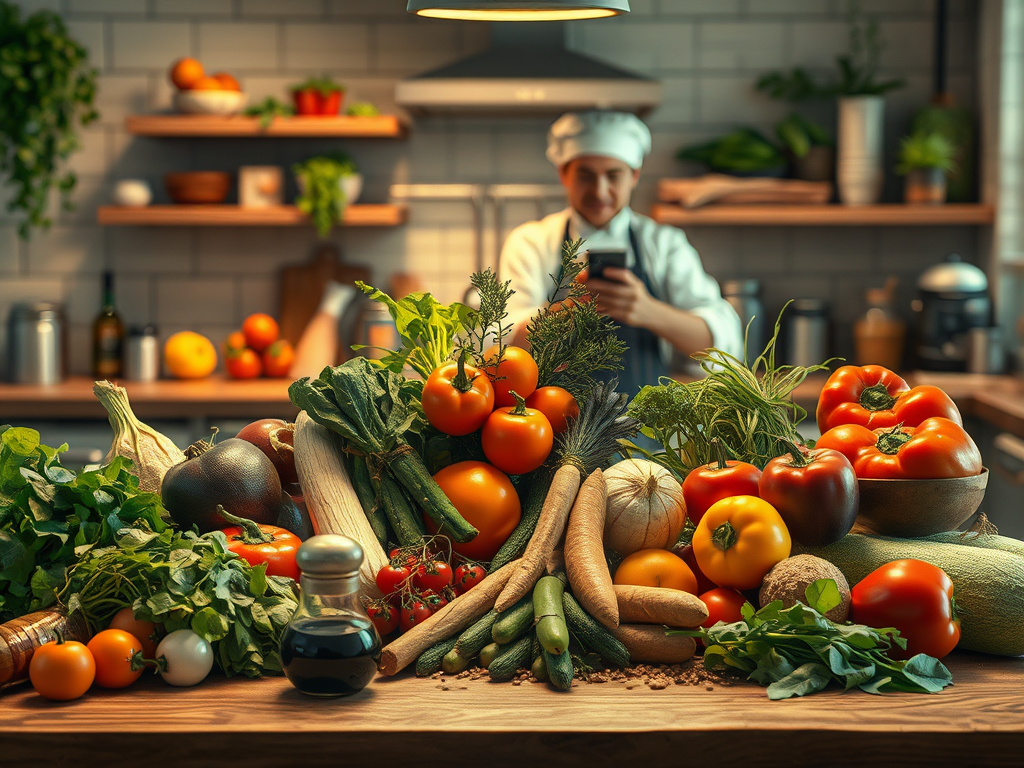
At some point in every cook’s journey, recipes begin to feel insufficient. Not because they are wrong, but because they are incomplete. A recipe can tell you what to do, but it cannot fully tell you what to notice. It cannot feel your stove, smell your onions, or adjust itself to the moisture trapped in today’s vegetables. Cooking without a recipe is not rebellion; it is graduation. It marks the moment when understanding begins to replace instruction.
Recipes are scaffolding. They exist to reduce uncertainty, especially at the beginning. Measurements, timings, and steps offer psychological safety: follow this, and you should be fine. But this safety is conditional. The recipe assumes average conditions—average ingredients, average equipment, average expectations. Real kitchens are never average. Heat output varies, pans behave differently, produce changes with season and storage. The more tightly a cook clings to instructions, the more fragile the process becomes when reality diverges.
Understanding changes the relationship entirely. When you know why a step exists, you can decide whether it still applies. If a recipe says to sauté onions for five minutes, but you recognize that browning has barely begun, you keep going. If a sauce looks thick before the stated reduction time, you stop early. Cooking without a recipe does not mean ignoring structure; it means responding to signals instead of numbers.
This shift often begins with repetition. When you cook the same dish multiple times, the recipe fades into the background and patterns emerge. You notice that certain steps always feel rushed, or that seasoning at a specific moment produces better results. Eventually, you stop reading and start anticipating. The dish becomes less about remembering instructions and more about navigating familiar terrain. This is how intuition is built—not magically, but through accumulated observation.
One of the key skills that enables recipe-free cooking is understanding ratios. Ratios reveal structure. Dough is flour plus water plus fat plus salt in predictable proportions. Vinaigrettes balance oil and acid. Braises combine liquid, aromatics, and protein in stable relationships. Once you internalize these ratios, you can improvise freely. You no longer need to know that a soup requires “three cups of stock”; you know it needs enough liquid to suspend ingredients and enough reduction to concentrate flavor.
Another essential skill is recognizing doneness beyond time. Time is a proxy, not a truth. Food is done when it reaches a state, not a minute mark. Vegetables are done when they yield but still retain identity. Meat is done when proteins have set to the desired firmness. Sauce is done when it coats the back of a spoon and tastes integrated. These conditions can only be assessed through attention. Recipes cannot taste for you.
Cooking without a recipe also demands comfort with correction. When you improvise, mistakes are unavoidable. But understanding allows recovery. Too salty? Dilute and rebalance. Too flat? Add acid or aroma. Too thick? Thin gently and re-reduce if needed. This flexibility reduces fear. You stop seeing mistakes as failure and start seeing them as intermediate states. Many dishes that seem “ruined” are only unfinished.
Culturally, cooking without a recipe is the default, not the exception. For most of human history, food knowledge was transmitted through observation and practice, not written instruction. Recipes emerged later, often as memory aids or prestige documents rather than practical manuals. In many households today, the most reliable cooks cannot tell you exact quantities. They cook by sight, sound, and habit. This is not a lack of rigor; it is embodied knowledge.
In modern contexts, returning to this mode of cooking can feel uncomfortable. We are trained to value precision and reproducibility. But cooking is not manufacturing. It is adaptive. Precision still matters, but it is contextual. A pinch is not vague when the cook knows what that pinch is doing. The danger lies not in flexibility, but in ignorance. Once you understand the mechanics, freedom becomes safe.
For a culinary platform, encouraging cooking without strict recipes is a statement of trust. It tells readers that they are capable of judgment, not just compliance. It reframes recipes as guides rather than contracts. This does not make content less useful; it makes it more durable. A reader who understands principles can cook tomorrow with different ingredients and still succeed.
Ultimately, cooking without a recipe is not about improvisation for its own sake. It is about fluency. Like speaking a language without translating in your head, it feels natural because the rules have been internalized. The cook is no longer assembling steps; they are responding to a situation. And when that happens, cooking stops feeling like a task and starts feeling like thinking—quiet, attentive, and alive.
Leave a Reply