
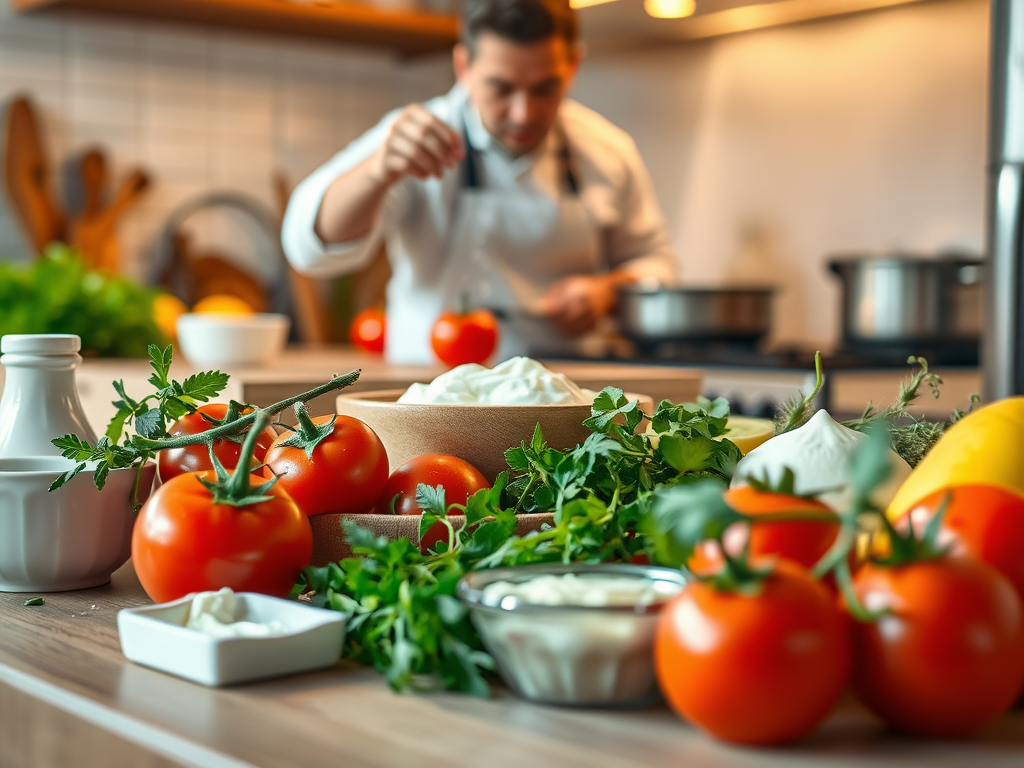
Cooking is often described as execution: follow the steps, measure carefully, and arrive at a result. But in practice, cooking is closer to translation than execution. The cook stands between raw ingredients and a finished dish, interpreting what is available, what is expected, and what is possible. Like any good translation, success is not judged by literal accuracy, but by whether the meaning survives the journey.
Ingredients, in this sense, are not words but dialects. A tomato grown in summer speaks differently from one shipped in winter. Butter from one brand melts and browns differently from another. Even water varies by mineral content, subtly influencing dough and stock. A recipe written in one kitchen is always being “translated” in another. This is why rigid adherence often fails: the conditions have changed, but the instructions have not. Good cooks adapt not because they are careless, but because they are attentive.
Technique is the grammar of this translation. It determines how ingredients are allowed to behave. Consider heat. High heat compresses time, forcing rapid reactions—browning, blistering, charring. Low heat stretches time, allowing collagen to dissolve, starches to swell, flavors to merge. Neither is inherently better; each says something different. A grilled eggplant and a braised eggplant are not variations of the same sentence; they are different paragraphs. The cook chooses heat the way a writer chooses tone.
Salt is another grammatical tool, not merely a seasoning. Applied early, it reshapes ingredients from within, changing how proteins hold water and how vegetables soften. Applied late, it sharpens the surface and clarifies perception. The same amount of salt can tell a different story depending on timing. This is why experienced cooks salt in layers. They are not chasing salinity; they are managing structure and emphasis.
Translation also involves loss. Something always changes. A substitution rarely preserves every nuance. Replace cream with coconut milk and you gain aroma but lose dairy sweetness. Replace anchovy with miso and you keep umami but shift identity. The mistake is not in accepting this loss, but in ignoring it. Skilled cooking acknowledges trade-offs and compensates elsewhere—adjusting acid, sweetness, or texture to restore balance. The dish may no longer be the original, but it can remain whole.
This is where many home cooks feel anxiety. They believe there is a single correct outcome and that deviation is failure. But culinary traditions themselves are records of adaptation. Dishes evolved because ingredients were scarce, seasons changed, trade routes opened, and households improvised. What we now call “classic” was once flexible. The rigidity came later, usually after the dish was written down. Cooking, historically, was not about precision but about resilience.
Context matters as much as technique. Food is eaten by people with expectations shaped by culture, memory, and habit. A stew served with rice communicates something different from the same stew served with bread. Spice levels, textures, and even portion sizes signal belonging. When you cook for others, you are not only feeding bodies; you are negotiating comfort. Understanding context allows you to decide when to honor expectations and when to gently challenge them.
Modern kitchens complicate this further. We cook with global ingredients but local constraints. We follow recipes from climates we do not live in, using equipment we do not have, for palates that may differ from our own. Translation becomes unavoidable. The cook who understands principles—why emulsions break, why dough needs rest, why acidity lifts richness—can translate confidently. The cook who relies only on instructions remains dependent.
There is also an ethical dimension to culinary translation. Using what is available reduces waste. Substituting intelligently respects resources rather than chasing purity. A flexible cook is often a more sustainable cook, able to work with seasonal produce and imperfect cuts. Integrity here is not about authenticity in the narrow sense, but about coherence: the dish makes sense given its ingredients, technique, and purpose.
Cooking as translation also explains why repetition matters. You do not learn a language by reading a dictionary once. You learn by speaking, listening, making mistakes, and adjusting. Similarly, culinary understanding deepens through iteration. The first roast chicken teaches timing. The fifth teaches heat management. The tenth teaches restraint. Over time, you stop translating word by word and begin to think directly in the language of food.
For a culinary platform, this perspective shifts how content is framed. Recipes become examples rather than commandments. Substitution guides become empowering rather than apologetic. Technique articles explain mechanisms, not just motions. Readers are invited to understand, not merely to comply. The result is not uniformity, but confidence.
In the end, cooking is a quiet negotiation between intention and reality. You rarely get exactly what you planned, but you can still arrive at something honest. When a dish works despite changes—because you understood what mattered and preserved it—you have translated successfully. And like any good translation, the result does not feel compromised. It feels fluent.

Leave a Reply to wizardtoo2de787aca3Cancel reply