
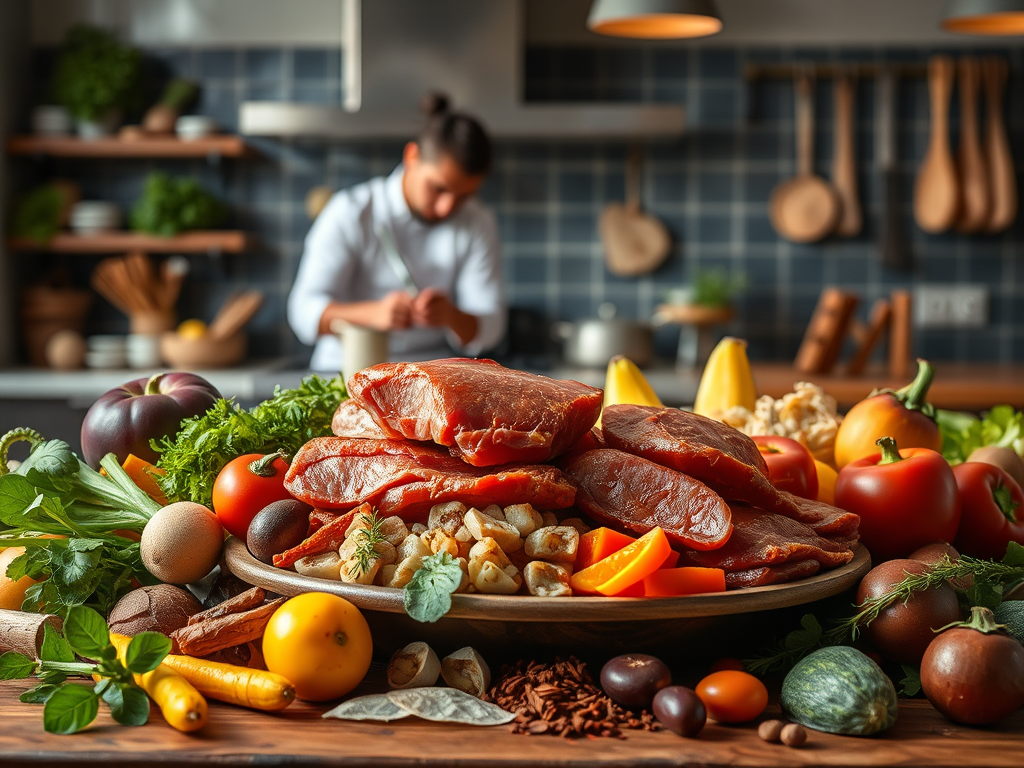
Culinary is often treated as entertainment—an attractive surface of recipes, plating, and restaurant lists. But if you step back, it is closer to a practical science of pleasure: a disciplined way to convert raw materials into texture, aroma, and meaning, under constraints of time, budget, equipment, and culture. Cooking is where chemistry becomes comfort, where heat transfer becomes memory, where a pantry becomes a vocabulary.
A useful way to understand “culinary” is to see it as a system built from three layers: ingredients (the material), technique (the transformation), and context (the story). Ingredients are the starting state: proteins, carbohydrates, fats, water, acids, minerals, aromatics. Technique is everything you do to shift that state: chopping, salting, heating, fermenting, emulsifying, reducing, resting. Context is what gives the dish identity: the region, the season, the people at the table, the constraints of the kitchen, and the cultural expectations that determine what “tastes right.” Most failed dishes fail not because the cook lacks talent, but because one of these layers is misunderstood: the ingredient’s functional role, the technique’s physics, or the context’s balance.
Start with ingredients. Not as a shopping list, but as behavior. Flour is not “flour”; it is starch plus proteins that will hydrate, swell, and (in wheat) form gluten networks. Meat is not “meat”; it is muscle fibers, collagen, fat, and water—each responding differently to time and temperature. Vegetables are not “vegetables”; they are water reservoirs with cell walls that can be softened, burst, sweetened, or kept crisp depending on heat and salt. When you understand how an ingredient behaves, you stop cooking by superstition. You stop following steps blindly and start predicting outcomes.
Consider salt: it is simultaneously seasoning and structure. In a soup, it sharpens and clarifies perception. In meat, it migrates inward, changing protein behavior and water retention. In vegetables, it draws out moisture, which can be useful (sweating mushrooms for browning, draining eggplant to reduce bitterness) or destructive (salting cucumbers too early and turning a salad limp). Salt is one of the reasons “simple food” is not easy: it demands precision. The same logic applies to acid. Acid makes fatty foods feel lighter by cutting richness; it brightens flavors that otherwise taste flat; it can also curdle dairy and toughen proteins if used without awareness. Sweetness is not only dessert. A pinch of sugar in a savory sauce can round harshness and balance acid, but too much collapses complexity into a single note. Fat is not only indulgence; it is a solvent for aroma molecules and a carrier of flavor, shaping how long taste lingers.
Then there is technique: the transformations that turn ingredients into cuisine. At its core, technique is controlled energy—how you apply heat, and how you manage water. The difference between a mediocre stir-fry and a compelling one is not a secret sauce. It is heat flux and timing. High heat sears; low heat softens. Dry heat browns; wet heat dissolves. In browning, you are chasing a specific chemical territory: Maillard reactions and caramelization, which build complexity. But browning is not merely “more heat.” It requires dryness. A crowded pan steams food. Mushrooms dumped into a cold, wet pan will sweat and boil; mushrooms added to a hot pan with space will brown and concentrate. This is why good cooking often looks like patience rather than action: waiting for water to evaporate, waiting for the pan to recover heat, waiting for the crust to form before flipping.
Moist-heat techniques—braising, stewing, poaching—are about time more than temperature. Collagen in tough cuts breaks down slowly into gelatin, changing chew into silk. That is why brisket and chuck can become luxurious, while a lean tenderloin becomes dry if treated the same way. When someone says “this meat is tough,” it can mean two opposite things: it is undercooked (collagen not dissolved) or overcooked (muscle fibers tightened and squeezed out water). The fix depends on diagnosis. Culinary maturity is the ability to read the failure mode and apply the correct remedy: more time at gentle heat, or less time and more protection (sauce, slicing thinly across the grain, resting).
Emulsification is another pillar of technique that separates “home cooking” from “culinary.” Many iconic sauces—mayonnaise, hollandaise, vinaigrette, pan sauce finished with butter—are emulsions: stable mixtures of fat and water that normally want to separate. An emulsion is both fragile and powerful. It gives sauces their glossy body and cling. It also explains why substitutions are not always straightforward. Replace egg yolk (a natural emulsifier) with nothing, and your sauce breaks. Replace cream with coconut milk, and you might lose stability or gain it depending on fat structure and heat. Once you see cooking through mechanisms, substitutions become less like gambling and more like engineering: preserve function first, then tune flavor.
Fermentation deserves special attention, because it is culinary time. It uses microbes to produce acid, aroma, and umami in ways that heat cannot replicate. Kimchi, miso, soy sauce, fish sauce, yogurt, sourdough—these are not merely ingredients but condensed processes. They carry depth because they contain many compounds created over weeks or months. Fermented foods also reveal that “fresh” is not the only axis of quality. Some of the most prized flavors are controlled decay. This is not romantic; it is practical. Fermentation is a reliable method to preserve food and intensify it, and it is one reason cuisines developed distinct identities: the local environment shaped which fermentations were feasible and which became traditions.
Now consider context: the part of culinary that recipes cannot fully encode. A dish is not only the sum of its ingredients. It is an agreement between cook and eater about what the dish is supposed to be. That agreement is cultural. The same stew can be judged “too thick” or “too thin” depending on what the diner expects. The same amount of chili can be perceived as vibrant or punitive depending on the eater’s baseline. Even the same technique can carry different meanings. A “crispy bottom” in paella (socarrat) is a prized feature; a crispy bottom in a different rice dish might be considered a mistake. When you cook across cultures, you are not only changing ingredients; you are translating expectations.
This is why “authenticity” is both important and limited. It matters because culinary tradition is accumulated knowledge: it encodes what works in a given climate, pantry, and social setting. It also matters because food is identity, and identity deserves respect. But authenticity becomes brittle when treated as a cage. A dish that cannot adapt dies outside its birthplace. The more useful question is not “is it authentic?” but “does it preserve integrity?” Integrity means the dish remains coherent in mechanism and balance. If you substitute basil for Thai basil, you change identity; if you adjust salt and acid to compensate, you preserve integrity in flavor architecture. The dish can still be honest if you name it properly: “Thai-basil pesto” rather than “pesto.”
In a modern kitchen, culinary integrity often depends on flexibility. You rarely have perfect ingredients. You have what is available: different brands of soy sauce, different water content in tomatoes, different fat percentages in meat, different stove power, different humidity. This is why good cooks rely on feedback loops rather than fixed outcomes. They taste, observe, adjust. They understand that every recipe is a model, and every kitchen is a different experimental setup. A recipe gives you a baseline; your senses and judgment complete the equation.
This is also where substitution becomes a philosophy rather than a compromise. Substitution, done poorly, is denial: pretending ingredients are interchangeable when they are not. Substitution, done well, is understanding: knowing what a missing ingredient does and replacing the function. If you don’t have buttermilk, you acidify milk to approximate its role in tenderness and leavening. If you don’t have tamarind, you recreate sourness and a hint of sweetness, while accepting that the fruitiness will shift. If you don’t have stock, you build a quick version of depth through aromatics, reduction, and umami condiments. The goal is not imitation at all costs; it is coherence.
Culinary, at its best, teaches a kind of disciplined attention. It trains you to respect limits: the heat that will burn garlic in seconds, the time collagen needs to soften, the delicate point where eggs set but do not curdle. It also trains you to see patterns. Across cuisines, you repeatedly encounter the same structural moves: a base of aromatics; a balance of salt, acid, and fat; a thickening strategy; a finishing element of fresh aroma; a textural contrast. Once you notice these patterns, you can improvise without chaos. You can open a fridge and build something that feels intentional, not accidental.
There is also an emotional dimension that is easy to underestimate. Food is one of the few daily practices that engages all senses and immediately rewards competence. You can learn a technique and taste the improvement that same day. That feedback is rare in modern life. It is why cooking can feel stabilizing: a small domain where inputs and outputs still make sense. Culinary skill becomes a way to care for oneself and others without requiring grand gestures. A bowl of soup is not only nutrition; it is a design for warmth.
If you run a culinary website, you are not only sharing recipes. You are teaching thinking. The most valuable content is not the list of steps, but the explanation of why: why we salt early here but late there; why we reduce uncovered; why we sear in batches; why we temper dairy; why we rest meat; why we finish with acid. When readers understand why, they stop being dependent on exact brands and measurements. They gain autonomy. They become able to cook in real kitchens with real constraints.
A good culinary post, therefore, can do three things at once. It can be practical: clear instructions that work. It can be explanatory: mechanisms that build skill transferable to other dishes. And it can be humane: acknowledging that cooking is messy, that substitutions are normal, and that integrity is the goal, not perfection. In that sense, culinary is not only about food. It is about adaptation—how to take what you have and, through technique and understanding, make it into something that holds together.
That is the quiet power of cooking: it takes the world as it is—uneven, imperfect, occasionally missing key ingredients—and turns it into a meal that still makes sense.


Leave a Reply